
Nash County Criminal Court Cases
Nash County is part of Prosecutorial District 8, Superior Court District 8A, and District Court District 8. The elected Clerk of Superior Court keeps the criminal files for both trial levels. District Court hears misdemeanors and infractions. It also conducts felony first appearances and probable-cause work, and it may accept pleas in some less serious felony cases. Superior Court conducts felony trials and hears misdemeanor appeals anew.
The court file begins when a charging document is filed. It then collects pleadings, court events, hearing settings, motions, dispositions, judgments, and financial entries. That makes the Nash County criminal case record distinct from an incident report created by police. It also differs from a booking record created at detention. One event may leave all three records, but only the Clerk's file shows how the filed prosecution moved and ended.
Nash Criminal Charges Change Courts
A felony can appear in District Court before it reaches Superior Court. This often trips up readers who search only one hearing list. District Court handles the first appearance and preliminary stage. A felony trial belongs in Superior Court. By contrast, a misdemeanor usually remains in District Court unless a conviction is appealed for a new trial in Superior Court.
- First appearance
- An early court review of the charge, custody status, and right to counsel.
- Probable cause
- The District Court stage that tests whether a felony matter should proceed.
- Disposition
- The recorded result, such as dismissal, conviction, or another formal resolution.
- De novo appeal
- A new Superior Court trial following an appeal from a District Court misdemeanor conviction.
A charge label can also change through amendment or plea. Read the disposition and judgment instead of treating the first allegation as the last word.
Searching Nash County Case Records
The North Carolina eCourts Portal provides the broadest remote starting point. Nash County moved to Odyssey and Portal on April 28, 2025. Public Smart Search is free and does not require registration. A case number is the cleanest key. A name can work, but common names may return unrelated parties. Narrow the result to Criminal Actions and the correct location.
- Open Portal and choose Smart Search. Enter a record number, citation number, or full party name.
- Use the Criminal Actions filter and select Nash County when the result set is broad.
- Open the case summary, then compare party details and filing context before relying on a match.
- Read events, hearings, and dispositions separately. Check judgment comments and financial entries when relevant.
- Ask the Nash County Clerk for a paper document, certified copy, or older file when Portal is unclear.
| Field or control | Type | Required | Use |
|---|---|---|---|
| Smart Search query | Text | Yes | Party, record, citation, attorney, business, cross-reference, or nickname |
| Advanced category | Filter | No | Choose Criminal Actions for the criminal docket |
| Search Hearings | Text and selectors | No | Case number, party, attorney, officer, or courtroom |
| Judgment Search | Text | One basis | Party name or case number |
| Judgment filters | Select and date | No | Case type, status, location, and judgment date |
Portal can also search hearings by attorney, judicial officer, or courtroom. Registration is not needed for an ordinary public Nash County case search.
Nash Court Records After Cutover
Nash County's April 2025 eCourts cutover changed how a reader sees new and converted case data. Enterprise Justice, also called Odyssey, became the working case system. Portal became its public search and payment view. North Carolina finished statewide deployment in October 2025, so one search can now reach all counties. The official or certified Nash County court record still comes from the Clerk.
Conversion creates one local reading trap. A legacy event may show 12:00 a.m. because the prior system did not store an event time. That timestamp does not prove a midnight hearing or filing. New information may appear within minutes after upload, though processing volume can cause delay. Portal financial figures are also for reference. The Clerk supplies a current payoff.
The Judicial Branch's clerk-check page shows the certified county option and the free terminal alternative.
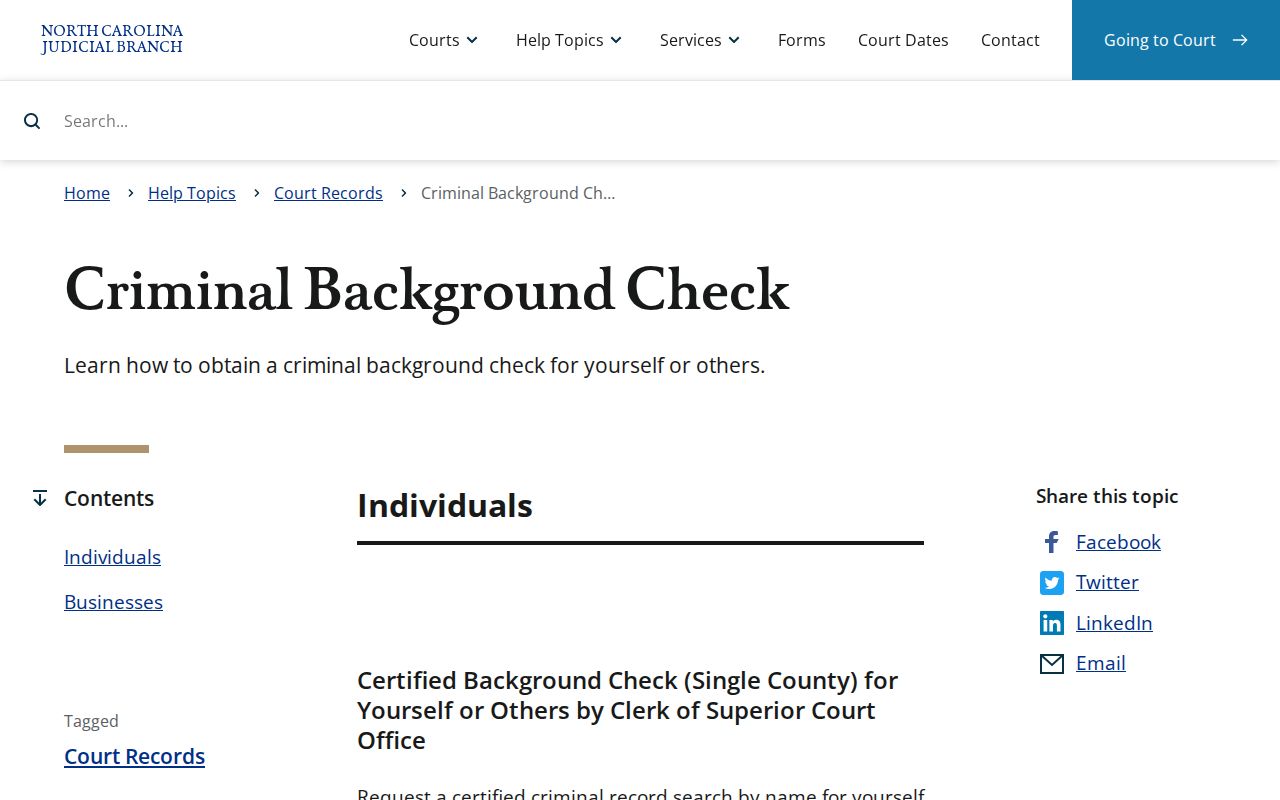
The captured official page helps separate a certified Nash-only name search from ordinary public docket research.
Inside a Nash County Case File
An eCourts view groups data by module. The paper file may hold the underlying instruments, while Portal exposes the public portions that the court permits online. Read the entries as a sequence. A scheduled hearing is not an outcome, and a filed charge is not a conviction. The disposition and judgment carry the result.
| Case number and court | The unique file reference, case type, status, and Nash County location. |
|---|---|
| Charging document | The filed accusation and charge history, which may differ from the first arrest allegation. |
| Docket entries | Chronological case events, filings, assignments, and procedural activity. |
| Hearing dates | Past or scheduled settings where they are available to the public. |
| Disposition and judgment | The dismissal, plea, trial result, conviction status, and judgment comments. |
| Sentence and conditions | Confinement, probation, financial terms, or other court-ordered conditions shown in the file. |
Portal may also show parties, assignments, index dates, and financial information. Social Security numbers do not appear. Juvenile matters, protected records, and unreturned warrants have access limits.
Nash Court Docket or Clerk Copy
Remote Portal access is useful for finding a Nash County criminal court case and reading public events. It is not a certified record. Courthouse terminals let the public search one county or statewide at no charge, then view or email noncertified results. Kiosk downloads are not available. Paper files must be inspected in the county where the matter was filed.
A certified Nash-only name search costs $25 and uses form AOC-CR-314. A mailed request takes a money order or certified check, not a personal check. An in-person request may be paid by credit card, cash, money order, or certified check. For one case, give the number, party name, approximate filing year, and document name. Other copy and certification fees were not published on the Nash page, so confirm them with the Clerk before ordering.
Nash County Courthouse and Clerk
234 W. Washington Street
Nashville, NC 27856
Mail: P.O. Box 759
252-220-3000
Monday, Tuesday, Wednesday, Friday: 8:30 a.m. to 12:30 p.m. and 1:30 to 5 p.m.
Thursday: 8:30 a.m. to 12:30 p.m. and 1 to 5 p.m.
How a Criminal Case Moves
A North Carolina case does not always use every stage. The path depends on charge level, plea decisions, and rulings. Still, the sequence helps a reader place each Nash County docket event in context. The police investigation comes first, but the court record begins with the filed accusation. For a felony, preliminary work starts in District Court before any Superior Court trial.
Case flow: Charges Filed › Arraignment › Pretrial › Plea or Trial › Disposition › Sentencing
After sentencing, the court file remains the source for the judgment. A prison, probation, parole, or post-release record may then appear in the correctional layer. The NC DAC Offender Public Information Search is separate from Nash County court records.
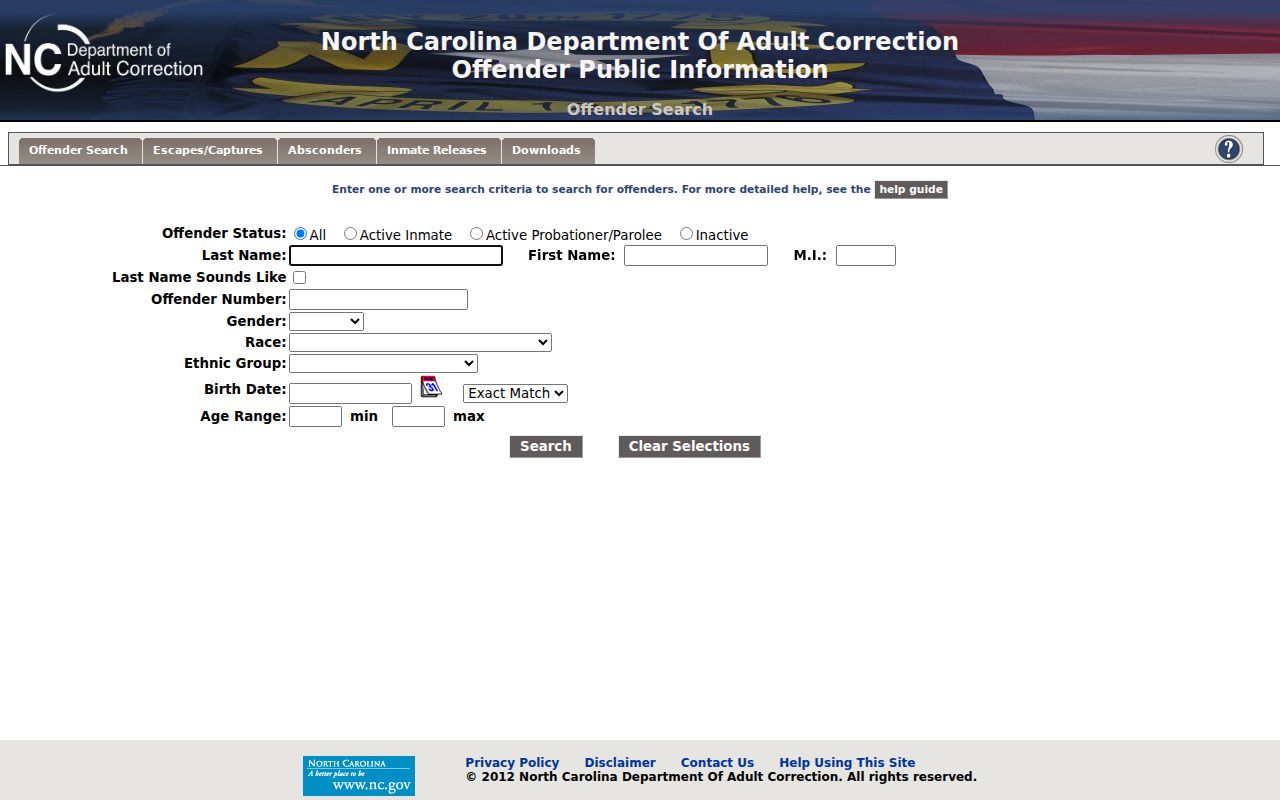
The NCDAC form shows custody and supervision status filters, not the motions and disposition detail kept in the criminal case file.
Nash Sentences and Supervision Records
A sentence can create records beyond the Nash County Clerk. North Carolina runs probation, parole, and post-release supervision through the NCDAC Division of Community Supervision, not a county probation department. Probation is court-ordered supervision. Parole is an older-law release path for applicable cases. Post-release supervision follows qualifying current-law prison sentences.
The NCDAC locator covers active and historical state offenders, probationers, and parolees back to 1972. It does not replace a Nash County criminal case search. Use the judgment to learn what the court ordered, then consult NCDAC for public status information. Detailed treatment and case-management facts are restricted.
The official Community Supervision page identifies the statewide structure that can follow a Nash judgment.
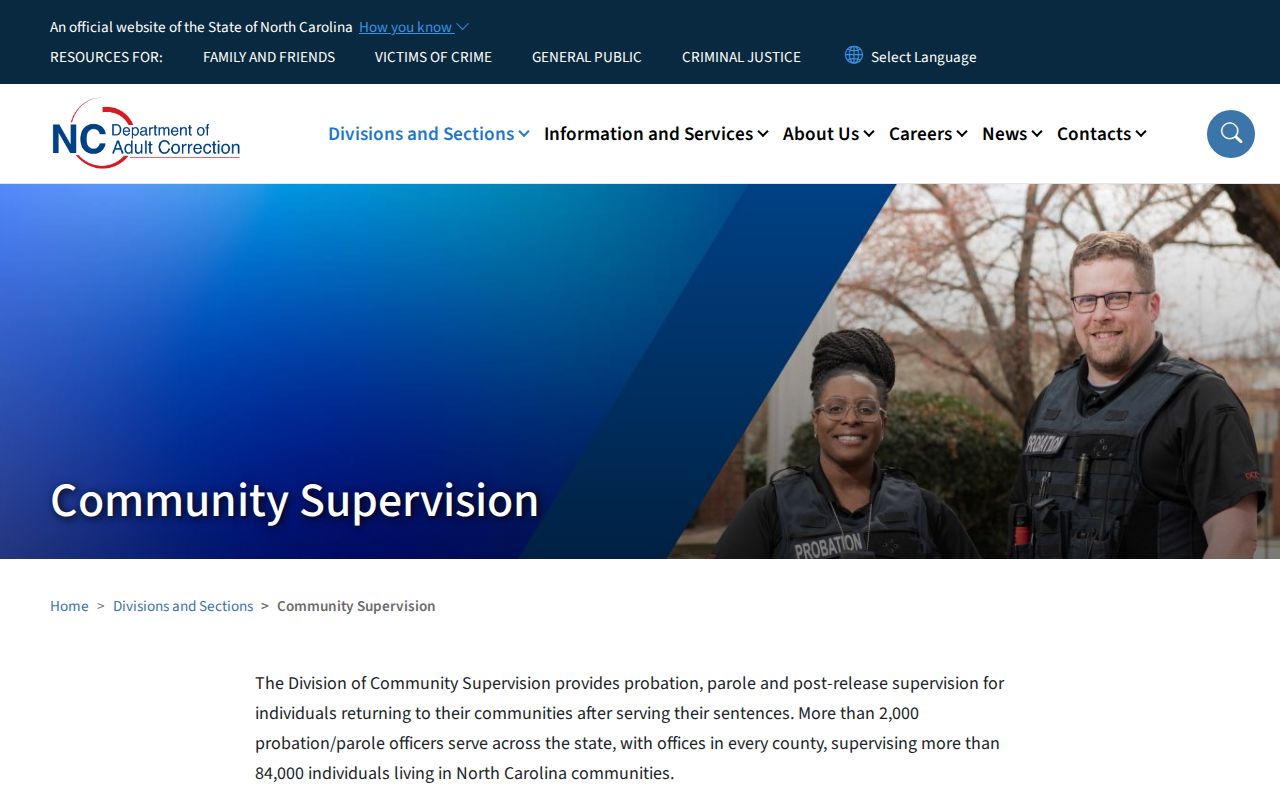
This distinction prevents a supervision listing from being mistaken for the full Nash County case docket.
Case Record Access & Restrictions
G.S. 7A-109 makes records of criminal actions, judgments, and court proceedings open for inspection during regular office hours unless another law bars access. That rule supports public terminals, paper-file inspection, and the public parts of Portal. It does not make every court-linked fact open.
Social Security numbers are withheld. Juvenile matters and some protective-order information have distinct limits. Expunction orders remove qualifying records from public access, and Chapter 15A, Article 5 controls that relief. Portal also restricts unreturned criminal warrants. An empty search cannot prove that no warrant exists.
If a Nash County criminal court record is missing, first verify the county and case number. Rocky Mount spans Nash and Edgecombe Counties, and the Rocky Mount Judicial Center is an Edgecombe facility. Then ask the Nash Clerk about older paper files, a converted entry, or restricted status. For the arrest trail that came before filing, use the separate Nash County arrest lookup channels.
Nash Court Charges and Outcomes
The first charge seen in a police or booking record may not match the final court result. Prosecutors in District 8 handle criminal cases across Nash, Edgecombe, and Wilson. The Nash court contact directory lists the local District Attorney and court offices. Prosecutors may proceed on the filed charge, amend it, dismiss it, or resolve it through a plea, subject to court action. The Clerk's events and dispositions show what occurred in the Nash County case.
North Carolina's class label also needs context. District Court handles misdemeanor Classes A1, 1, 2, and 3. Superior Court tries felony Classes A through I. A class alone does not state the sentence. Felony punishment depends on class, prior-record level, and the applicable range under G.S. 15A-1340.17. Misdemeanor punishment varies under G.S. 15A-1340.23.
Note: Read the disposition and judgment before drawing a conclusion from any arrest charge or early Nash County docket entry.